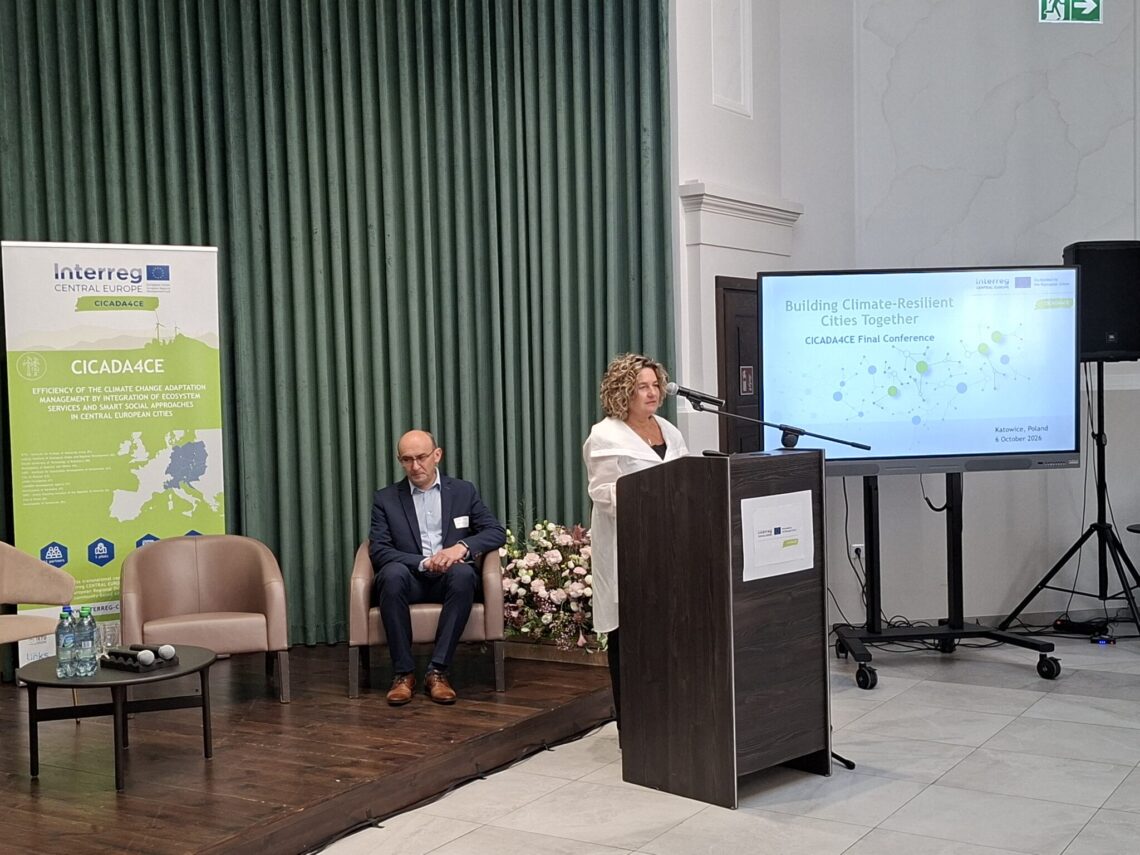
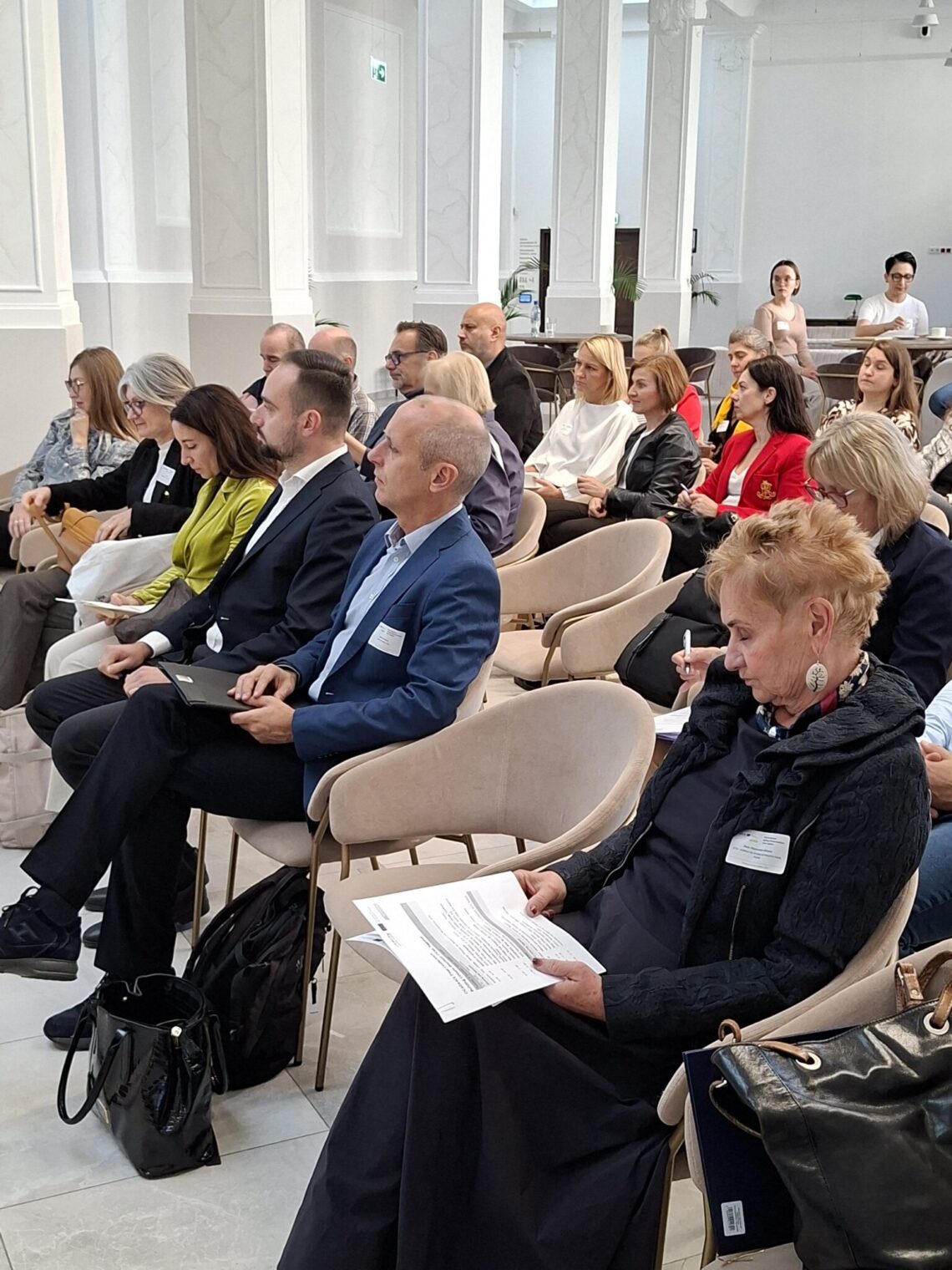
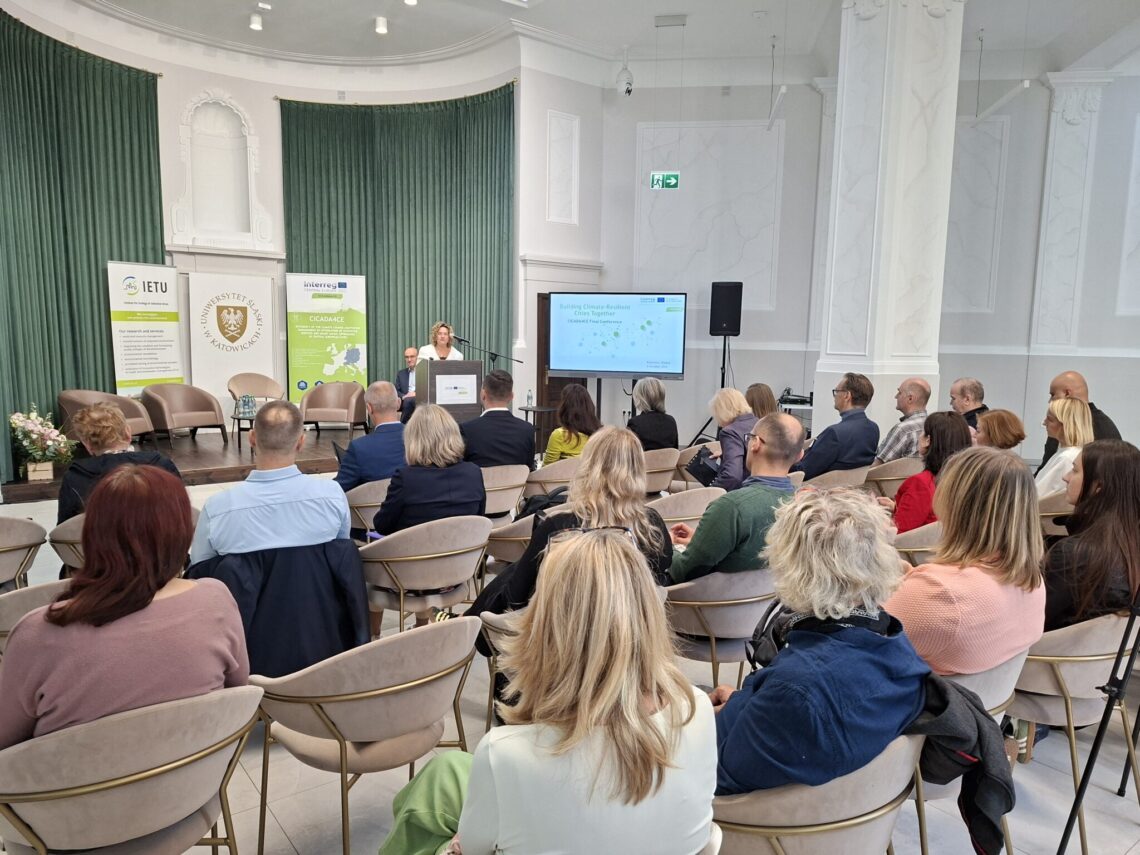
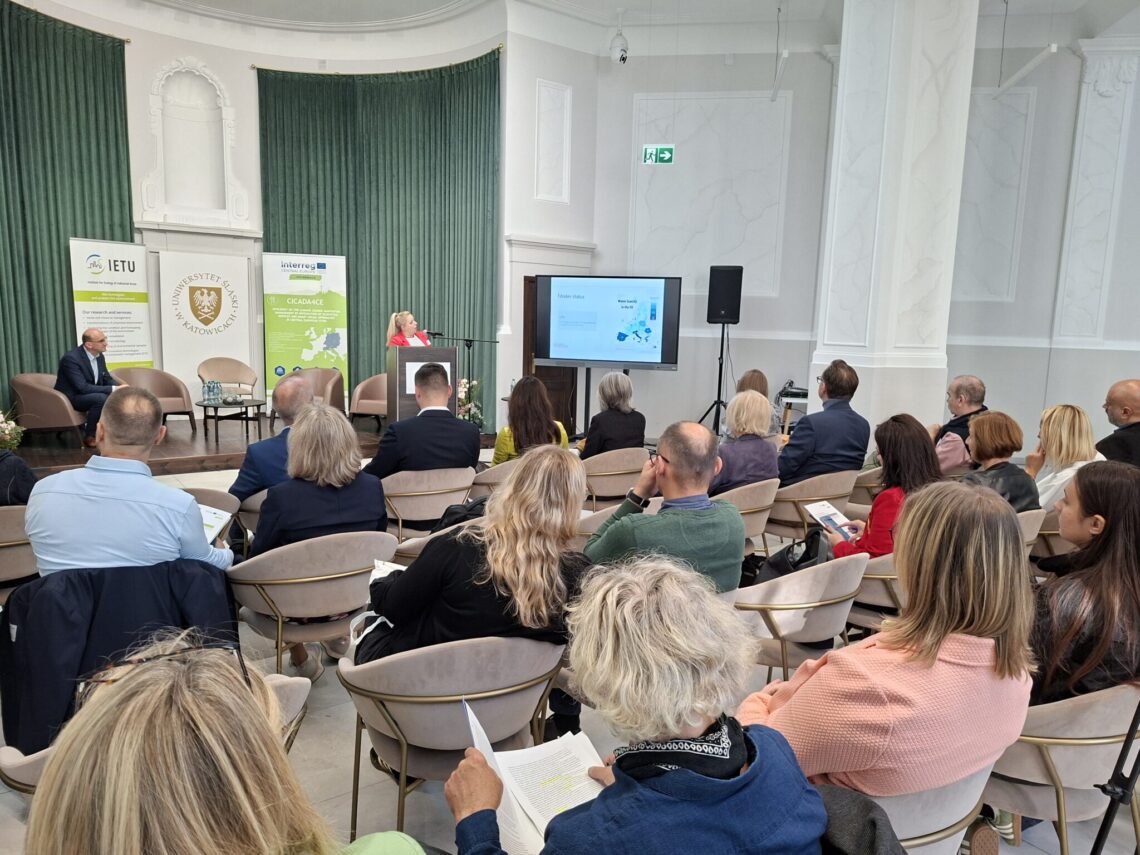
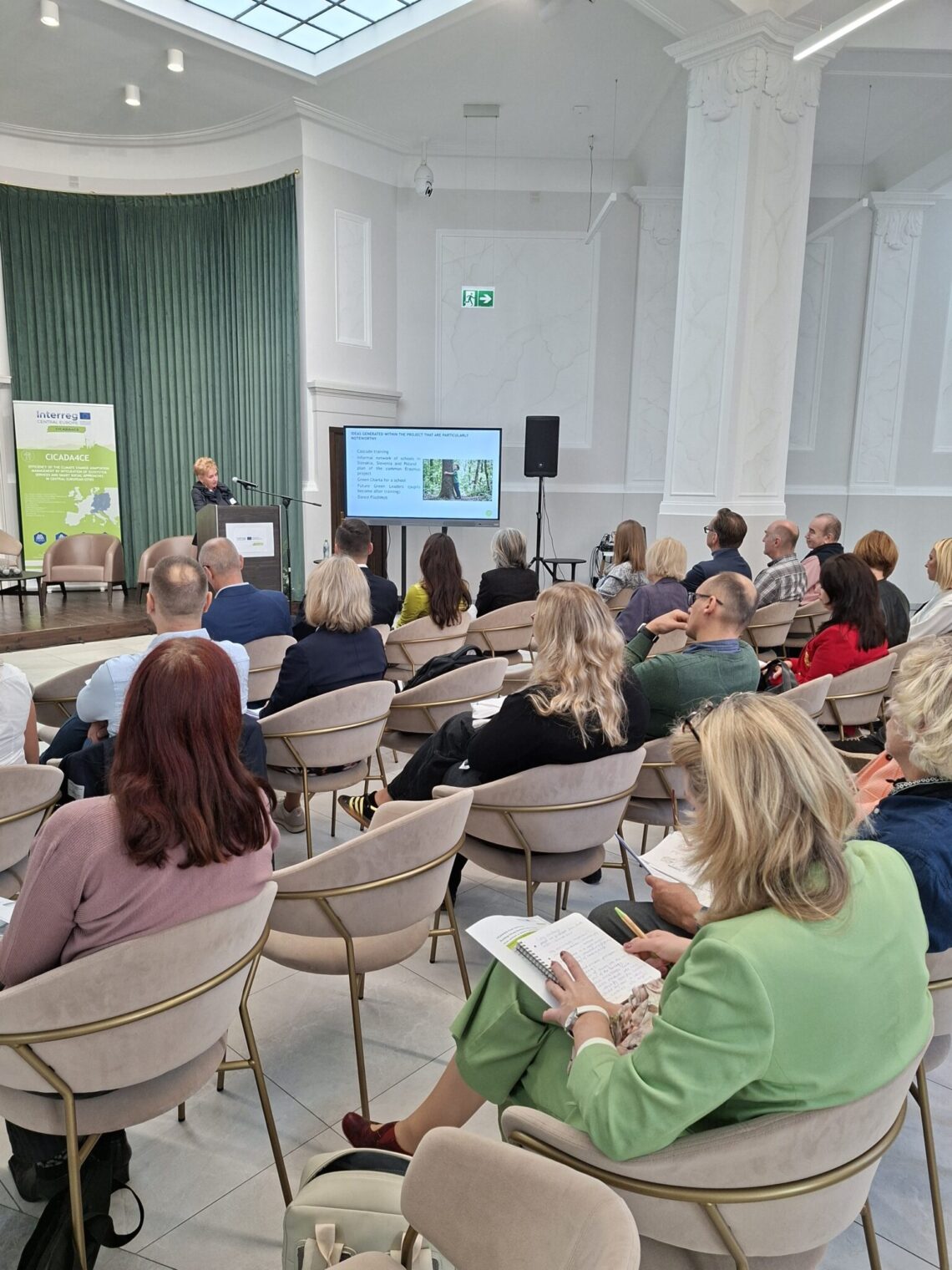
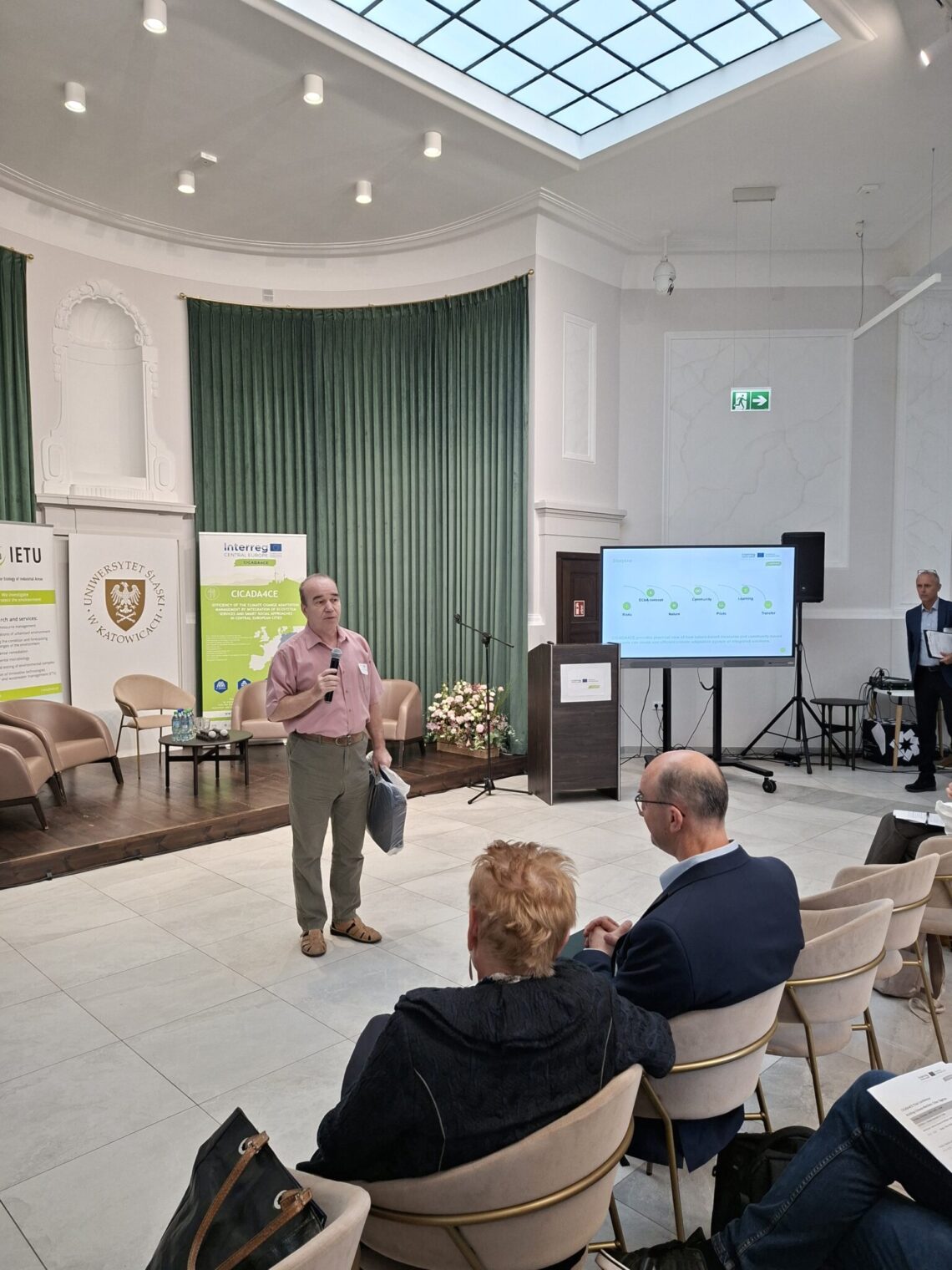
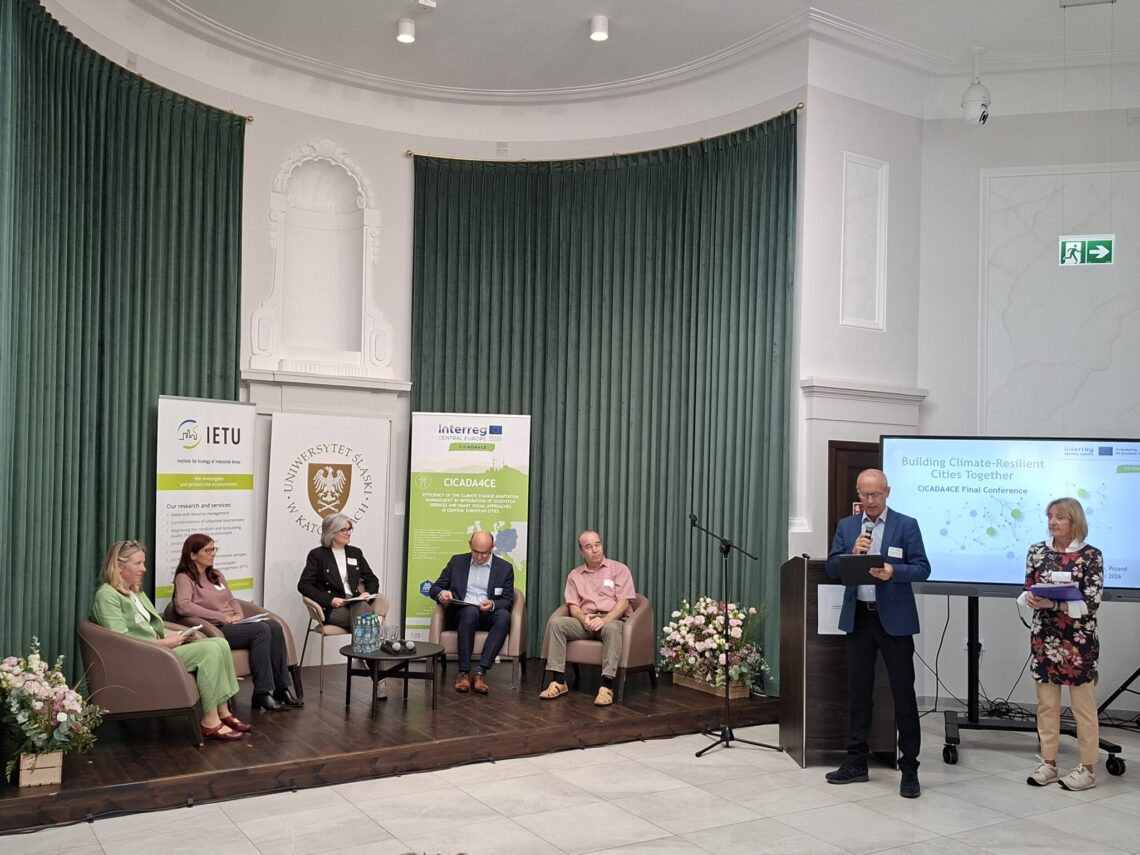
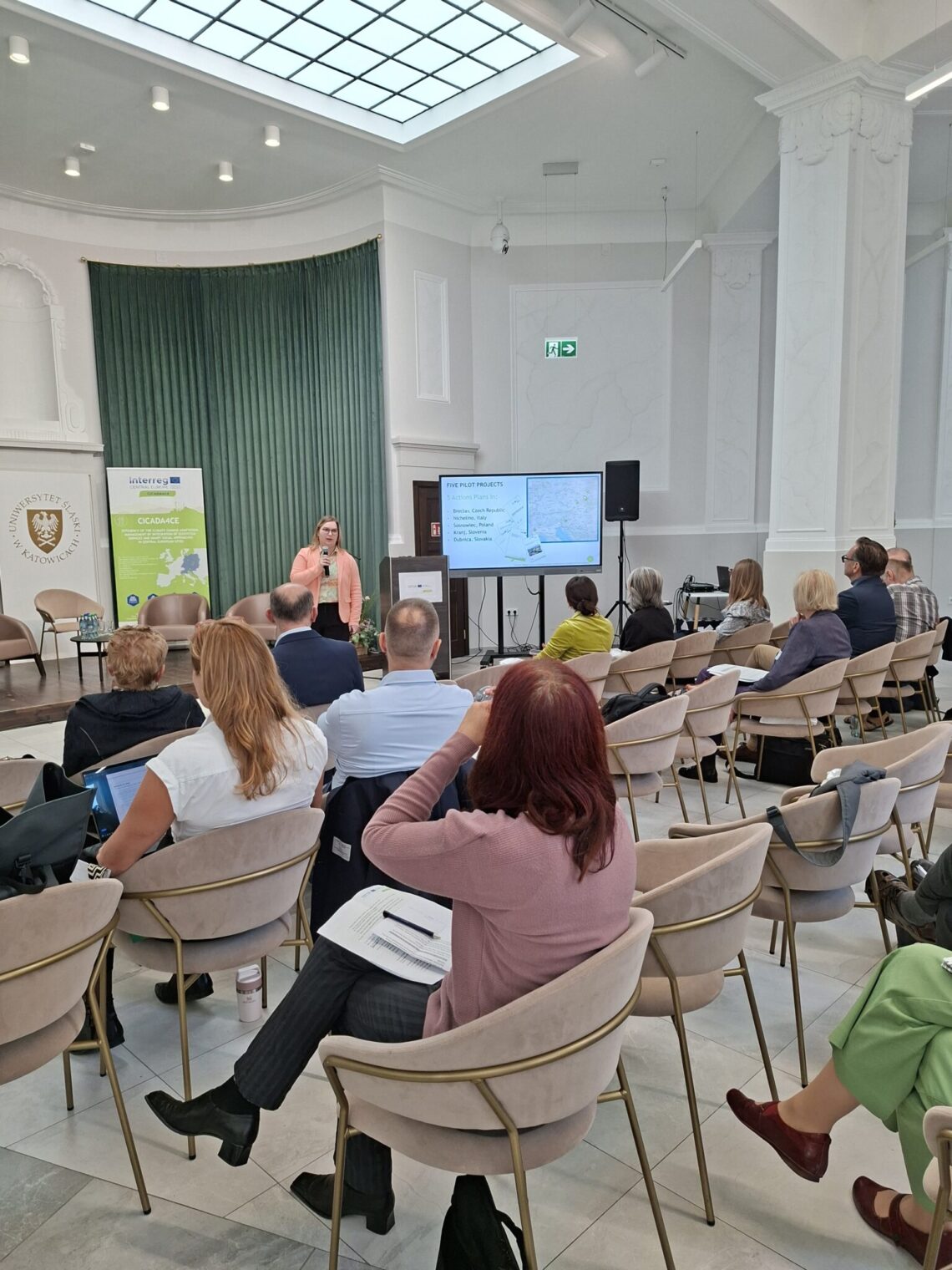
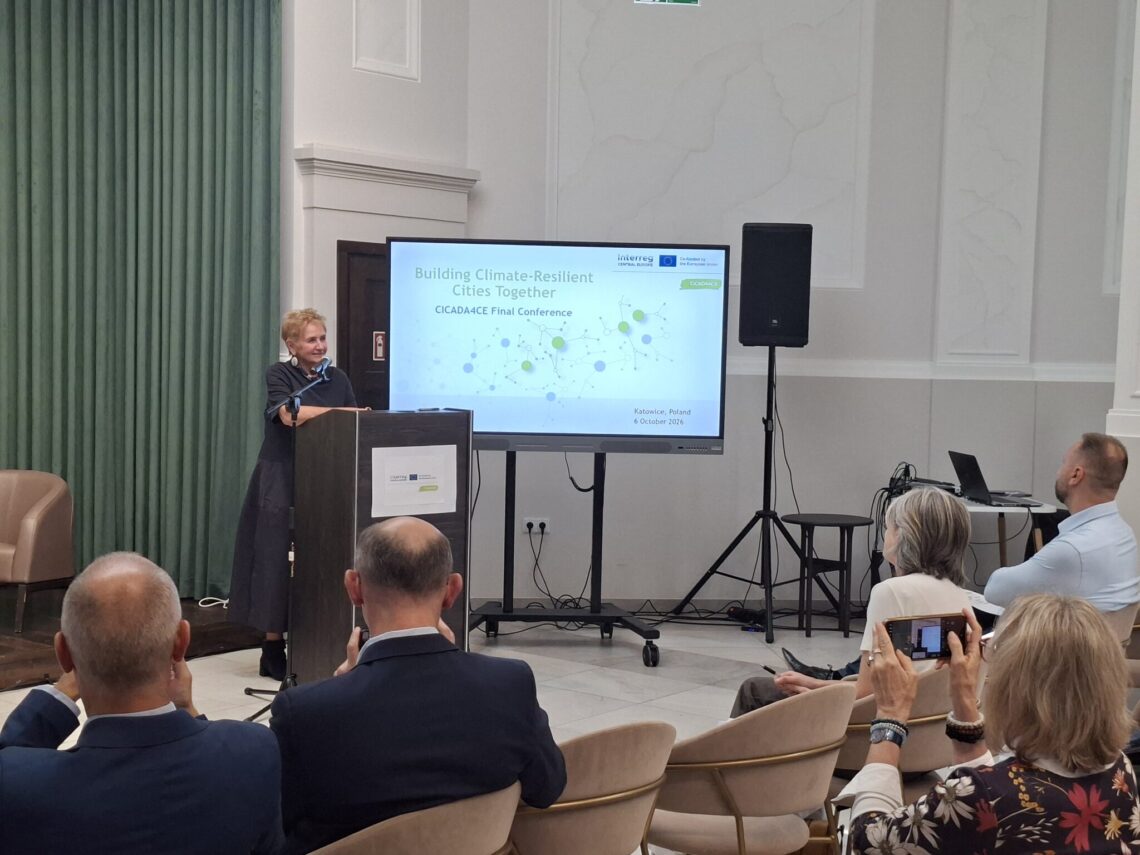
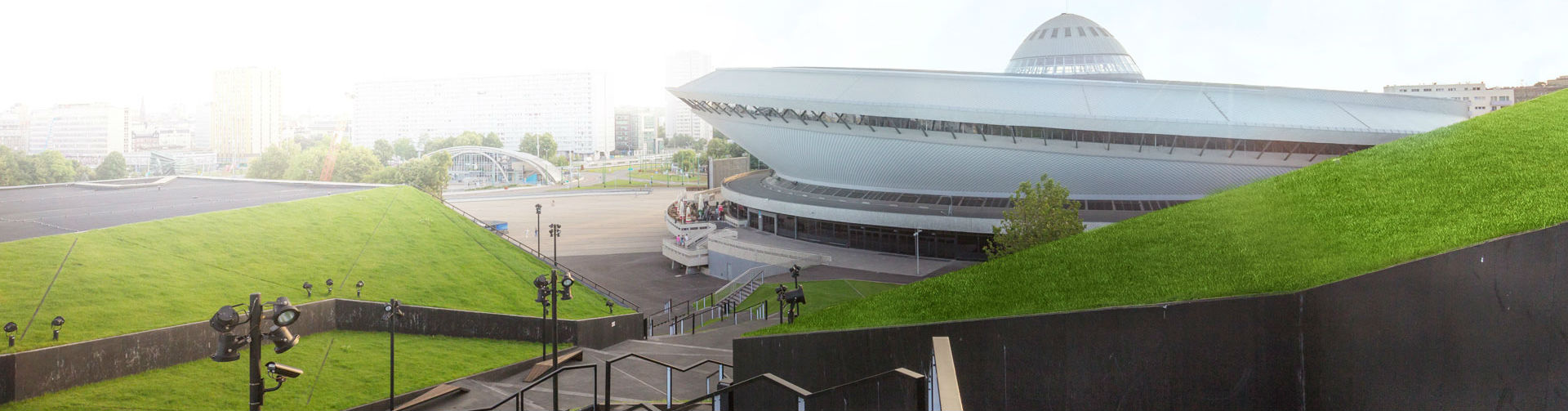
How can international cooperation help cities adapt to climate change? How can nature-based solutions be combined with active citizen engagement? And how can adaptation efforts be sustained beyond individual projects? These were among the key questions addressed during the final conference of the CICADA4CE project, held on 6 October 2026 at spinPLACE in Katowice, Poland.
Under the motto “Building Climate-Resilient Cities Together”, the event provided an opportunity to review the project’s achievements and exchange experiences among representatives of cities, institutions and organisations from Central Europe. The conference was hosted by the Institute for Ecology of Industrial Areas (IETU), the project coordinator.
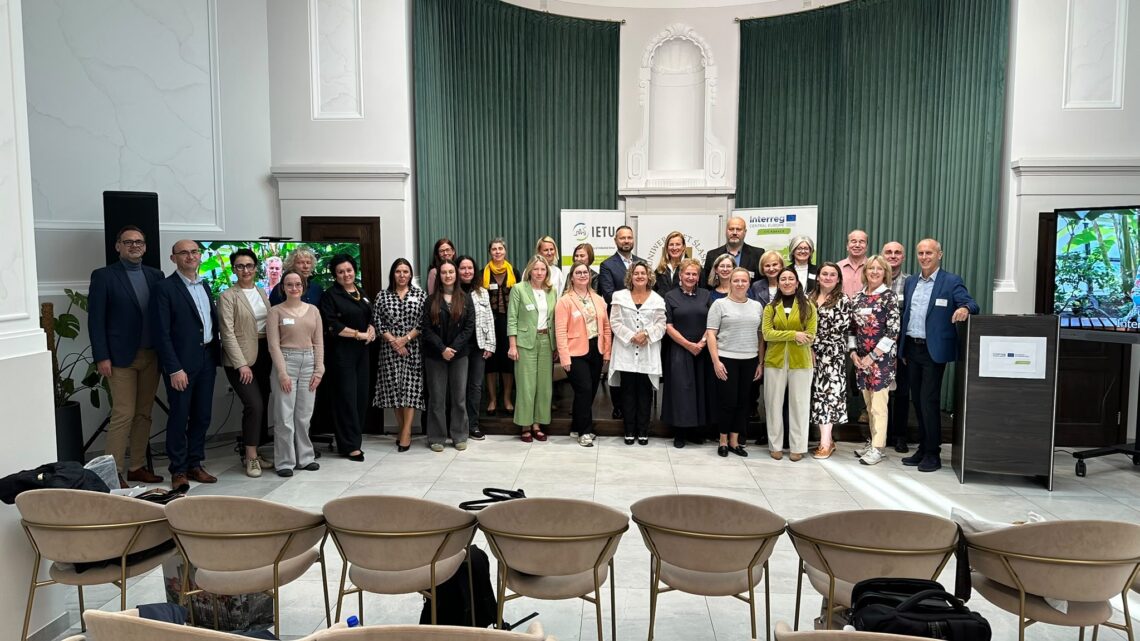
Participants included project partners from Czechia, Germany, Slovakia, Slovenia, Italy and Poland, as well as representatives of the Interreg Central Europe Programme, the Polish Ministry of Development Funds and Regional Policy, the Ministry of Climate and Environment, the City of Sosnowiec, universities and cities across the Silesian region.
Cooperation as a Key to Climate Resilience
One of the main messages of the conference was the importance of cooperation in preparing cities for the impacts of climate change. As the speakers emphasised, effective adaptation requires combining expert knowledge, local authorities’ experience and residents’ needs, alongside cooperation at both local and international levels.
Prof. Marta Pogrzeba, Director of IETU, highlighted the importance of joint efforts to build climate-resilient communities. Michał Wcisło, Deputy Mayor of Sosnowiec, underlined the value of the experience and results achieved through CICADA4CE. Christophe Ebermann, representing the Interreg Central Europe Programme, also stressed the importance of transnational cooperation. Representatives of national authorities highlighted, among other topics, the role of ecosystem services, citizen engagement and joint planning.
What Does CICADA4CE Leave to Cities?
Over 2.5 years, 13 partner organisations worked together to develop solutions helping cities prepare for the impacts of climate change. The project combined Ecosystem-based Adaptation (ECbA), Nature-based Solutions (NbS) and the active involvement of local communities.
The key project results include:
- The ECbA concept – an approach combining the potential of nature with the knowledge and engagement of local communities.
- Climate Adaptation Action Plans (CAAPs) developed for five pilot cities: Břeclav, Kranj, Sosnowiec, Dubnica nad Váhom and Nichelino.
- Pilot actions implementing Nature-based Solutions.
- The Handbook – a publication presenting the approaches and experiences developed through the project.
- Educational and training materials supporting the development of knowledge and skills in climate adaptation.
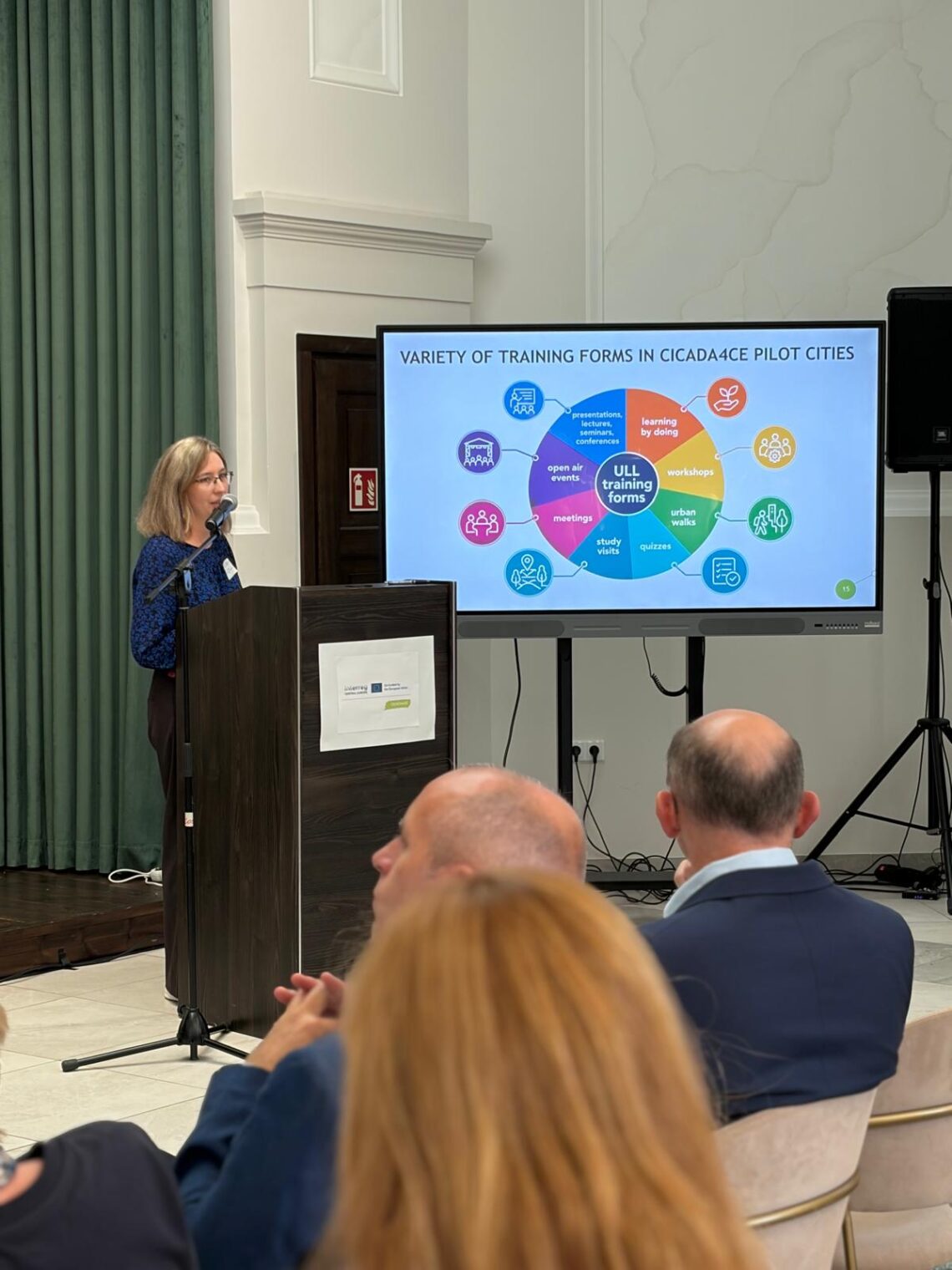
Another important element of the project was the development of Urban Living Labs (ULLs) in all five pilot cities. These provided opportunities to engage residents and local stakeholders in awareness-raising activities, the co-creation of climate adaptation plans and the co-design of pilot Nature-based Solutions tailored to local needs.
Cities Sharing Their Experiences
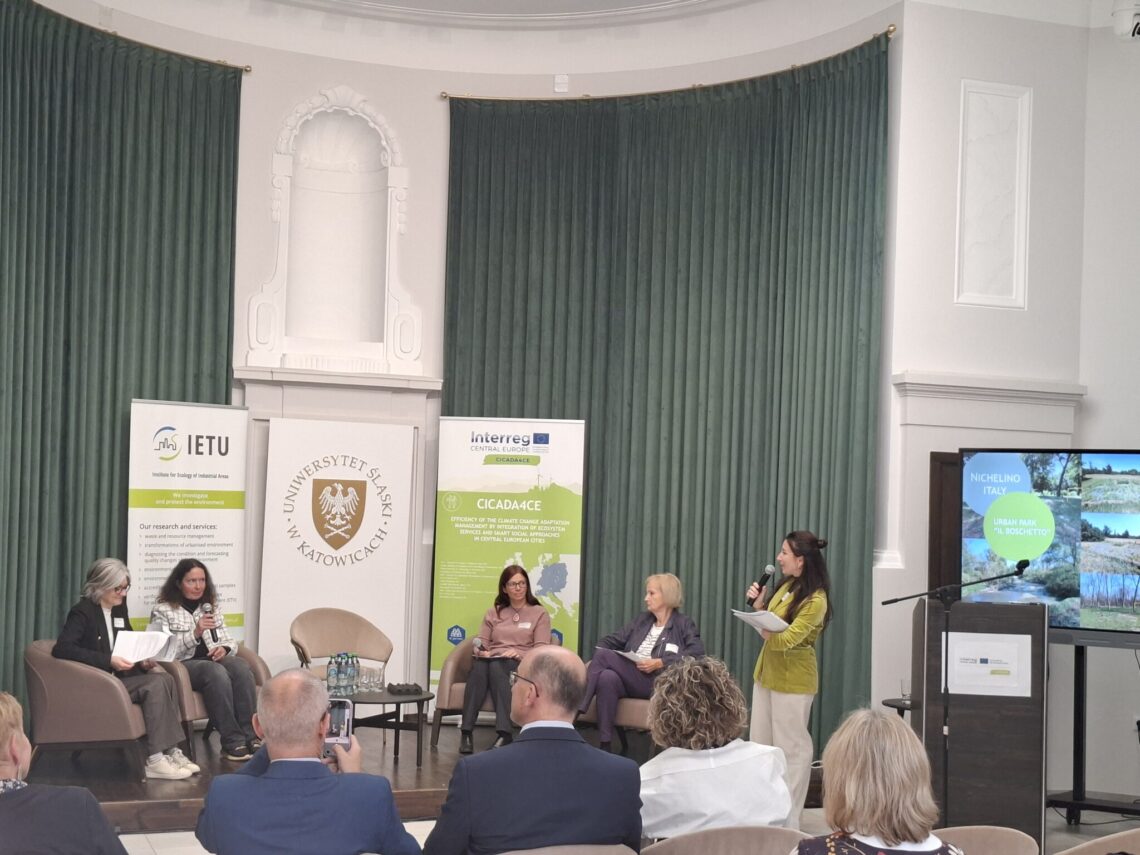
Panel discussions focused on cities’ experiences in developing climate adaptation plans and implementing pilot investments. Representatives of Dresden, Kranj, Sosnowiec, Dubnica nad Váhom and Nichelino discussed their approaches, the challenges they encountered and the lessons that could benefit other cities.
A second panel brought together representatives of Kranj, Nichelino, Dubnica nad Váhom and Břeclav to share their experiences of implementing Nature-based Solutions. They discussed practical aspects of implementation, challenges encountered and factors contributing to successful outcomes.
What Will Continue Beyond the Project?
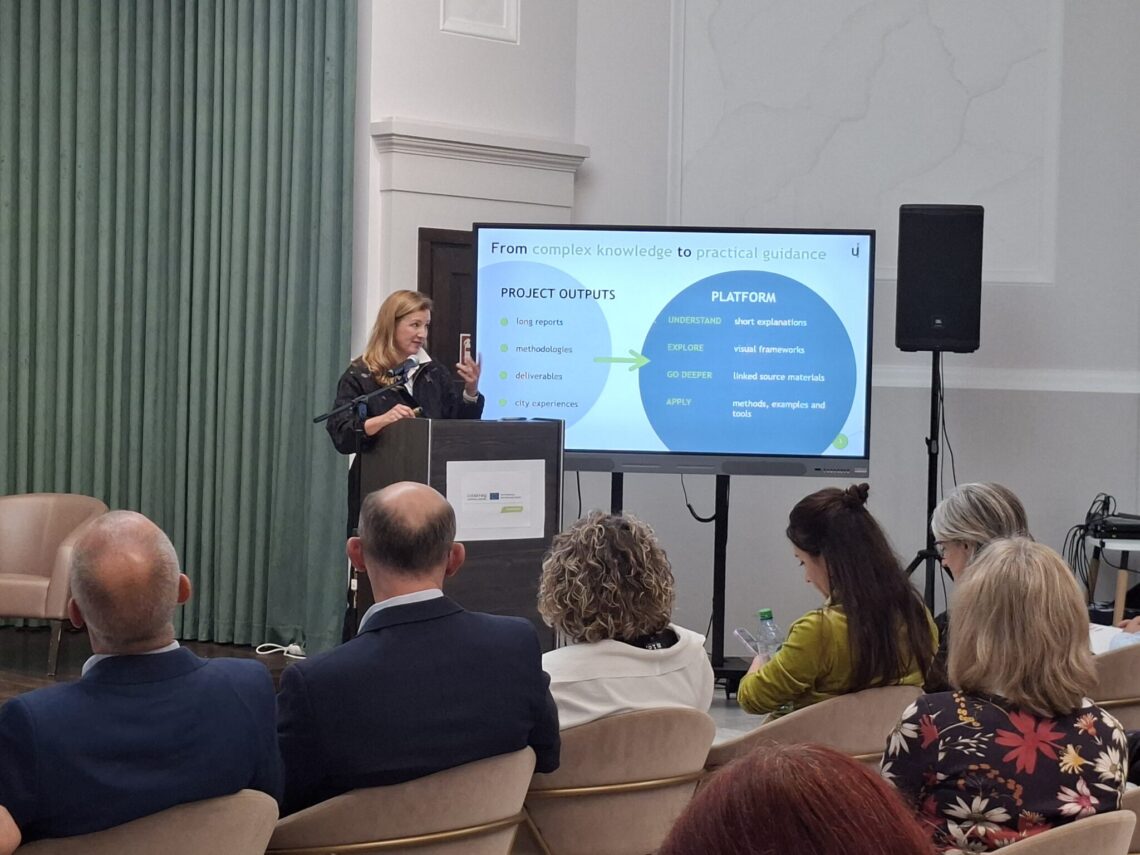
The CICADA4CE online platform will support the continued use of project results by providing access to knowledge, educational materials, tools and opportunities for cooperation.
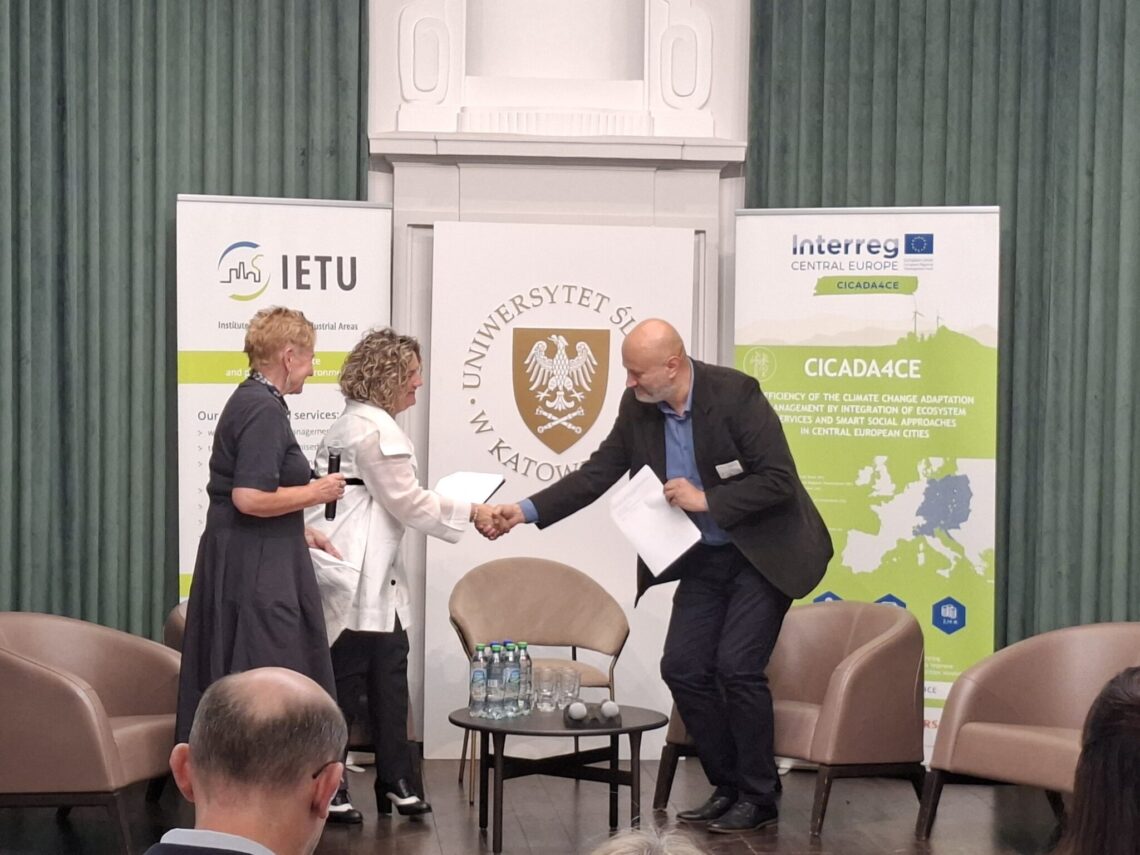
Further collaboration will also be supported by the Cities in the Green Deal World network, which will enable cities and organisations to continue exchanging experiences and developing joint initiatives. During the conference, Marta Pogrzeba, Director of IETU, and a representative of the City of Sosnowiec signed the Network Charter, confirming their commitment to continued cooperation.
Another positive outcome of the project is the cooperation established between school directors from the partner cities, who have begun preparing a joint application under the Erasmus+ programme.
Shared Experience – Inspiration for Future Action
The conference provided an opportunity to thank all partners, cities, experts and individuals involved in CICADA4CE for their commitment and collaborative efforts.
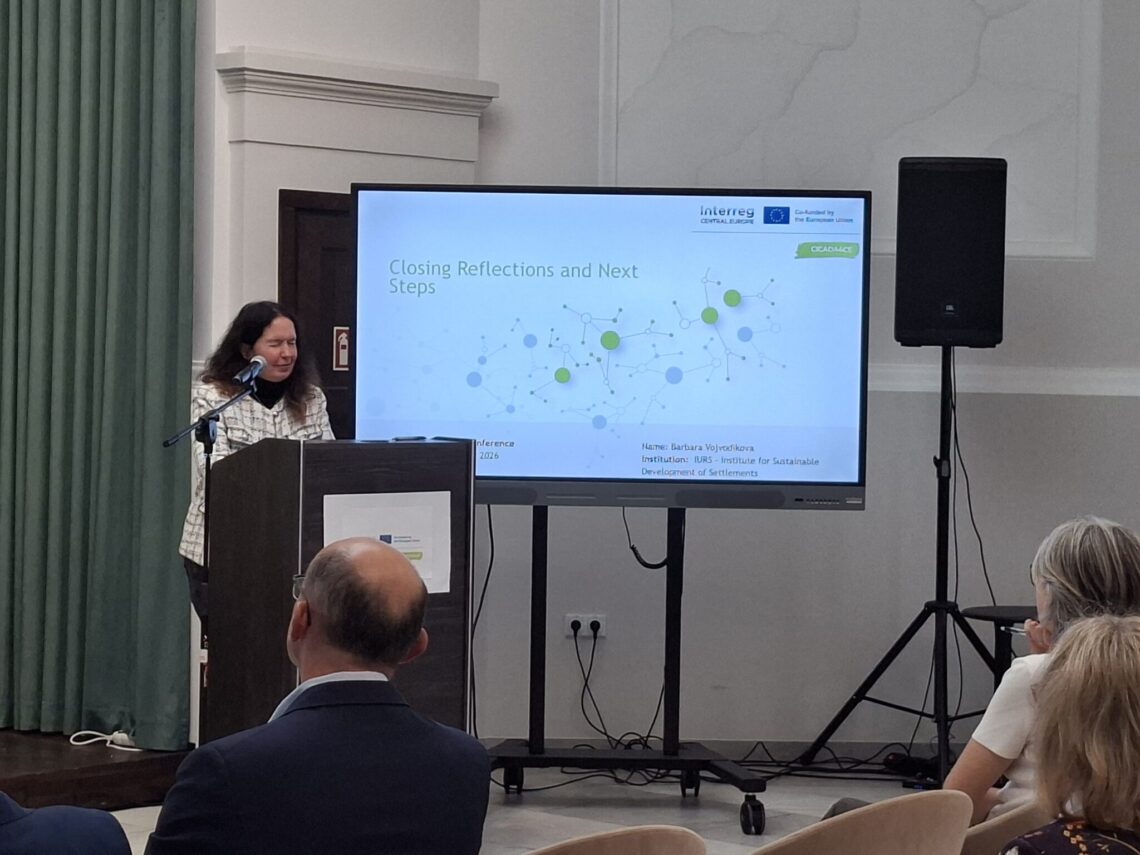
Although the CICADA4CE project is coming to an end, its results and partnerships can continue to support cities in the years ahead. The knowledge, tools and solutions developed through the project provide a foundation for further climate adaptation efforts, stronger cooperation between cities and the creation of greener, more liveable urban spaces.
Find out more about the project: https://www.interreg-central.eu/projects/cicada4ce/
Explore the CICADA4CE platform (website under development): https://cicada4ce.uirs.si/